
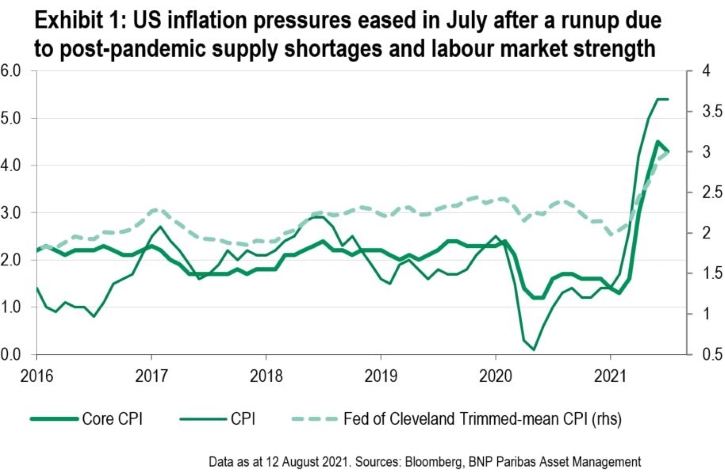
For the first time in several months, inflation in the US has moderated, indicating that price pressures in some areas have weakened. Big questions remain over the extent durable goods prices – which have been a significant source of inflation recently – will drop back, and how much rents will increase.
The latest data showed US core inflation (excluding volatile food and energy prices) rising by 0.3% month-over-month, causing the annual rate to dip slightly from 4.5% to 4.3%. The numbers were close to the market consensus expectation.
Inflation has been propelled upwards since the spring by a huge increase in used car prices, abutted by a jump in hotel rates and transportation fares as the economy reopened.
Relief in some areas, less so in others
The worst of these price pressures now looks to be over. That said, there are still clear signs of supply chain pressures on goods prices:
- Brand new vehicle prices have continued to rise
- Electronics prices have not been falling at the rate they normally would
- Companies report still long supply chain waiting times
- Prices of manufactured goods imported from China have risen by 2% in the last 12 months.
But at some point those pressures should also ease off.
Looking ahead, the outlook for inflation through the end of this year and into 2022 can be roughly characterised as a contest between
- How far, and how fast, durable goods prices drop back as supply chain bottlenecks ease
- How much rental rates increase.
What is the outlook for rents?
Various alternative data sources suggest there should be (perhaps sizeable) upward pressure on rents in coming months. However, measuring rent prices is difficult and differences in methodology can lead to different outcomes. The extent to which these alternative sources use methodologies that are comparable to that in the consumer price index is not at all clear.
Currently, the pandemic has depressed rents particularly severely in the northeast and western most regions of the US. Those areas have still much higher unemployment rates than in the Midwest and the south. Given housing’s sensitivity to the business cycle, it is perhaps not surprising that rent inflation is weakest in these areas.
With about half the shortfall in nationwide employment concentrated in companies operating face-to-face consumer services, the current surge in Covid cases would probably have to ease off for rental inflation to rise decisively.


