
Once the pandemic is past, the existential issues around climate change will still require action on an unprecedented scale. This may include changes in behaviour – beyond working from home and less (business) travel – and multi-trillion dollar investments in energy transition and environmental protection, says Edward Lees, co-portfolio manager in our environmental strategies investment group.
Fundamentally, from an environmental perspective, nothing has changed as a result of the pandemic in the sense that the problems that were here five or 10 years ago remain. If anything, the pandemic has reminded us not to ignore existential threats, to take them seriously and to look for opportunities for a coordinated response.
A welcome increase in awareness
The types of problems to be solved are unchanged, but what has changed for the better over the course of the pandemic is that public awareness has grown and governments are now on board, having set net zero emissions goals: for 2050 in the case of the EU, followed by Japan, South Korea, China and the US with 2060 targets.
This wave of awareness has significantly increased support globally to accelerate climate change mitigation measures. These net zero targets require major steps to be taken. This will involve trillions of dollars of expenditure, meaning trillions of dollars of investment opportunities and double-digit growth rates in climate-related industries over the next 10 to 20 years.
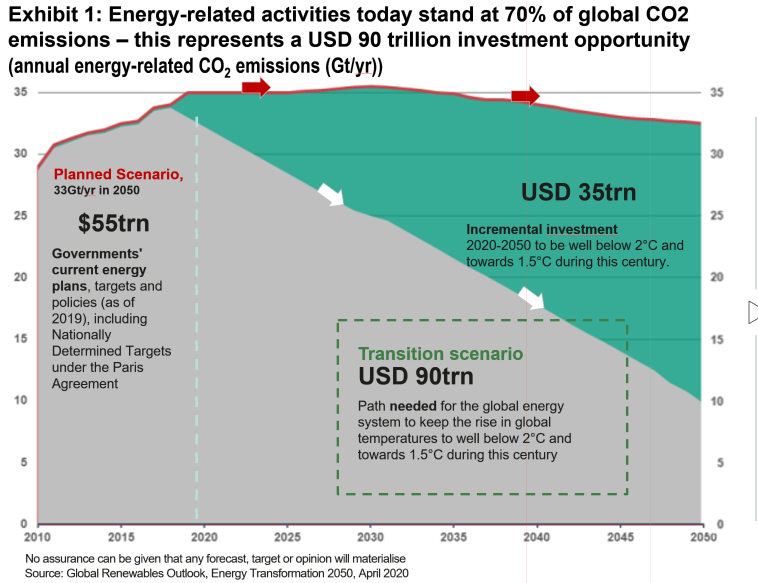
The growing realisation that climate and environmental issues require substantial action has meant that money has flowed to related market segments in anticipation of accelerated activity. Valuations of companies addressing the issues and providing solutions have risen.
How to help restore ecosystems?
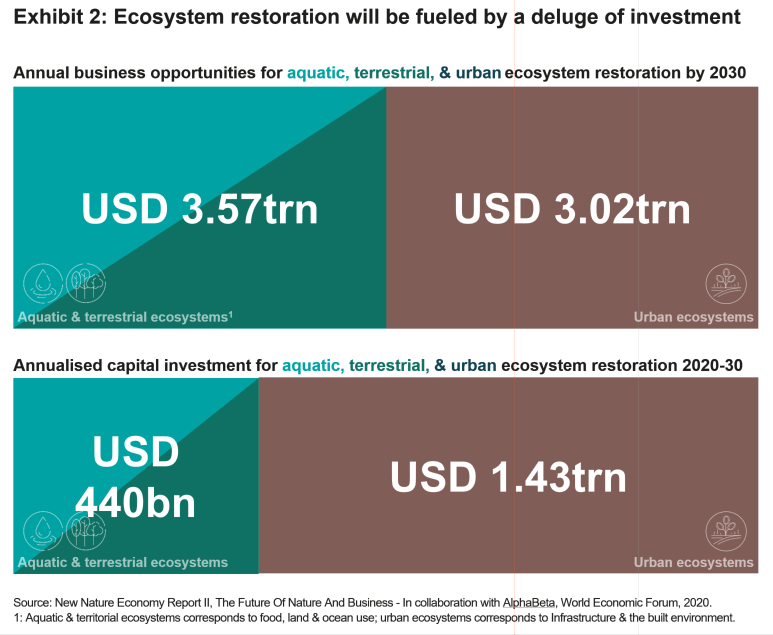
Dealing with the fragility of ecosystems – water, land and air – is a multi-faceted investment area requiring technology and innovation.
On the water side, some key issues are wastewater and residual sludge treatment, pollution by plastics, as well as the overfishing of oceans and the restoration of coastal areas. There are opportunities in water efficiency to reduce our consumption and in desalination.
On land, problems such as plastic and waste disposal and biogas require action. We need sustainable agriculture, packaging, forestry and fertilisers. There is the search for alternative sources of protein and ways to reduce the water intensity of food production. There is a need for environmental meters and measuring equipment.
Issues relating to air concern carbon capture and filtration equipment to avoid pollution.
And in the human ecosystems, we should consider the impact of the built environment, the need for green buildings, and the possibilities of efficiency gains by using vertical farming.
Attractive opportunities in the envirnmental space
There is a broad and developing range of sectors, industries and businesses that present exciting opportunities to do good and benefit climate change, while targeting positive investment returns.
For instance, alternative proteins are an exciting new area, but equally there are opportunities in ways to industrialise the recycling of plastics by breaking them down chemically and reusing them. The pace of growth in this area is picking up.
In more traditional areas – wind, solar, battery and electric vehicles – development continues apace and, importantly, there is policy support.
In some areas the technology does not exist or is not yet used extensively. For example, decarbonising heavy transportation equipment such as ships and airplanes efficiently using fuel cells. Research is being done on nuclear fusion, which does not produce nuclear waste or involve the risk of meltdowns.
To sum up, the problems surrounding climate change have not been abated by the pandemic and will take trillions of dollars of investment to address. We believe this is an area that will offer investors exciting and rewarding opportunities for decades to come.
- Also listen to the podcast with Edward Lees
- More articles on sustainable investing