What are the five human activities threatening the ocean’s health and its ability to support jobs and business and act as a carbon sink? What can sustainability-minded investors do to discourage companies from, for example, trading protected species or engaging in industrial fishing?
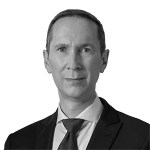
Listen to Robert-Alexandre Poujade, ESG Analyst and Biodiversity Lead, and Chief Market Strategist Daniel Morris as they discuss these and other ocean-related issues. “We should all feel we are stewards of the ocean,” Robert-Alexandre concludes.
You can also listen and subscribe to Talking Heads on YouTube, Spotify, or wherever you normally get your podcasts.
'%20stroke-linecap='round'%20stroke-linejoin='round'%20stroke-width='1.5'%3E%3Cg%20id='Groupe_2053'%20transform='translate(0.000000,%200.000000)'%3E%3Cg%20id='Groupe_2052'%20transform='translate(0.000000,%200.000000)'%20stroke='%23000000'%3E%3Cpath%20d='M18.4540324,59.8528676%20L53.9497699,59.8528676%20M18.4540324,46.9257252%20L53.9497699,46.9257252%20M18.4540324,33.7194065%20L53.9497699,33.7194065%20M49.3206324,1.68214405%20L49.3206324,15.8351117%20C49.3268545,18.7239746%2051.6700073,21.0660674%2054.5664199,21.0785262%20L70.1474885,21.0785262%20M71,88.1573858%20L71,97.21999%20C70.9921897,99.8577889%2068.8493379,101.993774%2066.2046228,102%20L4.79395637,102%20C2.1494732,101.99377%200.00703000231,99.8575597%206.82121026e-13,97.21999%20L6.82121026e-13,4.78284428%20C0.00702293205,2.14481193%202.14901353,0.007786332%204.79395637,3.41060513e-13%20L46.7673604,3.41060513e-13%20C49.8036296,0.164165919%2052.6966954,1.34042575%2054.9827296,3.34019673%20L67.5729037,15.6253751%20C69.6239707,17.8560674%2070.8352532,20.7275985%2071,23.7498333%20L71,57.5783595'%20id='Tracé_4850'%3E%3C/path%3E%3C/g%3E%3Cline%20x1='18.4540324'%20y1='72.9897466'%20x2='53.9497699'%20y2='72.9897466'%20id='Ligne_2193'%20stroke='%231D1E1C'%3E%3C/line%3E%3C/g%3E%3Cline%20x1='70.5'%20y1='65'%20x2='70.5'%20y2='83'%20id='Ligne_2194'%20stroke='%23018D54'%3E%3C/line%3E%3C/g%3E%3C/g%3E%3C/svg%3E)
Read the transcript
Talking Heads with Robert-Alexandre Poujade, ESG Analyst and Biodiversity Lead
Daniel Morris: Hello and welcome to the BNP Paribas Asset Management Talking Heads podcast. Every week Talking Heads will bring you in-depth insights and analysis through the lens of sustainability on the topics that really matter to investors. In this episode, we’ll be discussing the recent United Nations Ocean Conference. I’m Daniel Morris, Chief Market Strategist, and I’m joined today by Robert-Alexandre Poujade, ESG Analyst and Biodiversity Lead. Welcome, Robert-Alexandre, and thanks for joining me. You have just returned from the United Nations Ocean Conference in Nice where you met colleagues and policymakers for discussions on how to protect and preserve our ocean. Can you give our listeners an update on the condition of our ocean and the main issues that need to be tackled? What are the takeaways from the conference?
Robert-Alexandre Poujade: Finance was at the heart of the discussion. We saw new firm financial commitments totalling more than $8 billion by 2030 that were announced. And there were new coalitions announced. Mobilising more financial resources to invest in a sustainable blue economy is key. Since the ocean’s health is being severely threatened by five main pressures linked to human activity. One, direct exploitation of species. It’s driven by the wild capture fishing industry. You can think about sharks, tuna, but also small forage fish used as fish feed for aquaculture. It’s essential that companies in the sector improve their fishing technique and take into account fish stocks. We saw many countries increasing the marine protected areas in their national waters. That’s a strong positive for species and fishermen because they enable species to regenerate. Another take is that multilateralism is not dead. The high seas treaty will likely enter into force in January 2026, which is a huge positive to enable the creation of marine protected areas.
Pressure number two, land use change, also makes a significant contribution to nature and biodiversity loss by converting coastal habitats such as mangroves, lagoons, sea grass beds. Number three: the consequences of climate change because CO2 is being absorbed by the ocean –which is acidifying. The scientists are alarmed by the effect that it can have on marine biodiversity, including coral reefs, and, of course on fisheries tourism. Warming ocean temperatures is leading to major changes in terms of, for example, sea level rises, new shipping routes such as the Arctic. Pressure number four is plastic pollution, nutrient pollution. There’s a 37-country coalition to tackle underwater noise pollution. Those countries have also lined up behind a moratorium on deep-sea mining. Five – the last pressure – invasive species.
Daniel Morris: A long list of pressures then. What can investors do? How can they integrate the ESG issues related to the ocean in their decision-making?
Robert-Alexandre Poujade: We believe there are six ways in which investors can support ocean preservation. We’ve launched case studies that can be accessed in the ocean paper that we’ve released. The second way is the exclusion of companies where we believe their behaviour or their business model pose unacceptably high risk to society and the environment. There are ocean-related exclusion criteria on trading protected species, industrial fishing in the high seas, severe environmental pollution. Number three is so-called ESG integration. To help make better decisions, we need credible data which is aligned with international standards. In defining best practices, we face significant data gaps. Four: ways in which we can help companies transition their business models. We are supporting shareholder proposals relating to the ocean. There is another way which is collaborative engagement. The fifth lever is our blue economy exchange-traded fund. There’s another strategy, which is an impact loan facility which is supporting reef-positive businesses within marine protected areas. And the sixth is how we can increase our efforts to raise employee awareness on ocean preservation.
Daniel Morris: We’ve heard a lot of things that investors can do. What’s next for BNP Paribas Asset Management?
Robert-Alexandre Poujade: We are doing more research on our risk and opportunities in ocean-related themes. I mentioned plastics, chemicals. We hope the international tax on plastic will be fruitful and that a strong UN treaty on plastics will emerge. I was mentioning our work on seafood species. We need to capitalise on that and try to expand this type of analysis to other sectors to understand species conservation, ocean-related data and also ocean footprint. We also want to continue to provide solutions to address the ocean finance gap, so leveraging on the strategies that we’ve launched. There are innovative solutions. We need to find ways to better connect those solutions with the public and the private sector. We should all feel stewards of the ocean.
Daniel Morris: That’s a great message to leave our listeners with. If I could summarise some of the key points that you shared with us: you highlighted that finance was at the heart of the discussions at the United Nations Ocean Conference in Nice. You highlighted five pressures on the ocean: direct exploitation of species, land use change, climate change, pollution, and invasive species. Many things that investors can do to support ocean preservation. And finally, you highlighted the recent publication of a paper by BNP Paribas Asset Management: Sustainable by Nature, reconnection to Our Ocean. Well, Robert-Alexandre, thank you very much for joining me.
Robert-Alexandre Poujade: Thank you, Daniel.
Daniel Morris: That’s it for this week’s episode of Talking Heads. If you would like more information about our strategies, please reach out to your BNP Paribas Asset Management contact or check out Viewpoint, our website for investment insights at viewpoint dot BNP Paribas dot com. Viewpoint brings commentary and analysis in a variety of formats, from investment outlooks to asset allocation videos and podcasts to help investors make better informed decisions. You’ve been listening to the BNP Paribas Asset Management Talking Heads podcast with me, Daniel Morris, and Robert-Alexandre Poujade, ESG Analyst and Biodiversity Lead. Please do join me next week. Until then, take care.