“HOTEL CALIFORNIA: no leaving QE”
In 2020, investors may face a year of ‘lower for longer’ when it comes to economic growth and inflation; amid persistent quantitative easing (QE), this looks set to apply yields and central bank rates as well.
As they search for yield, we believe many investors will have little choice but to accept taking extra risk to earn the returns they seek.
In our Investment Outlook for 2020, we investigate the chances of
- recession in major economies
- a fiscal boost in the US ahead of the presidential elections
- a trade war-induced squeeze on the Chinese economy
- the – admittedly limited – options for central banks to support growth and lift inflation.
Where do the opportunities lie?
We discuss our broad asset allocation views for major asset classes including developed market debt and equity, and highlight areas of the market that we favour.
Also in this outlook: disruptive change in a superstar economy
We distil four investment themes from our recent Investment Forum, entitled Disruptive change in a superstar economy, which we think will influence the global economy and markets over coming years.
- China’s evolving strategic objectives
- A potential expansion in US fiscal policy
- Increasing regulation of today’s superstar firms
- The impact of climate-related policy risks on industry
Read more in the 2020 Investment Outlook “Hotel California: No Leaving QE”

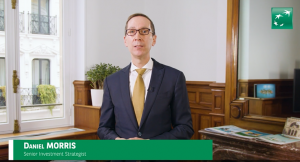
“A repeat of 2019 is not very likely longer-term” – Daniel Morris
In this video, senior investment strategist Daniel Morris analyses the performance of the main financial markets in 2019 and assesses the prospects for 2020, expecting asset classes generally to struggle to match strong returns of 2019.
He discusses forward price earnings ratios for the main equity markets, the impact of the Sino-US trade war, debt levels, and other aspects of the outlook.