
Graph of the Week – The reality of how consumers perceive inflation

The latest survey by the New York Fed found that US consumers expected inflation in one- and three-years’ time to have returned to more historically average levels in January, after peaking above 9%. However, actual inflation was reported hotter than forecast in January – after the survey was published. Will this cause consumer perceptions to change?
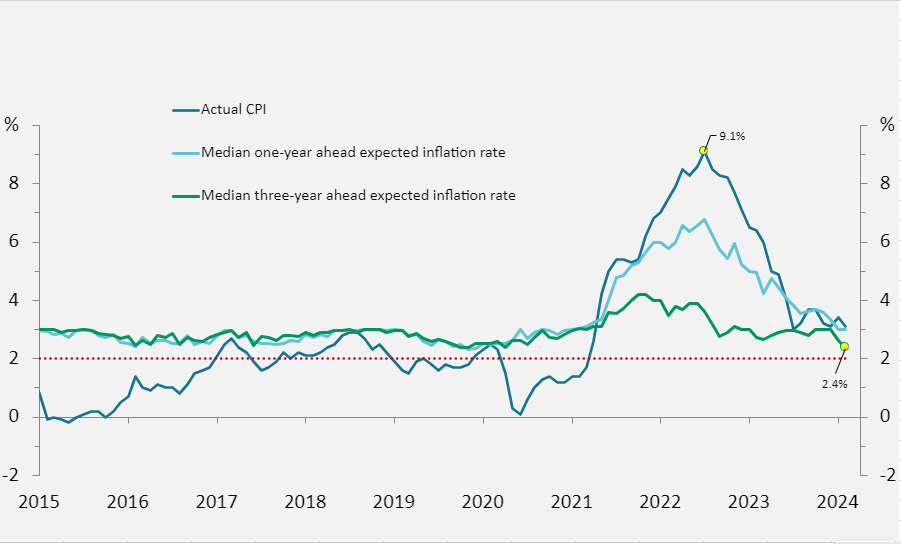
Professional forecasters expect inflation to ease to 2% in Q1 2025 in the US (headline PCE). Underscoring the confidence of economists and businesses that the 2% target set by the US Federal Reserve is in sight, the Fed of Atlanta found that business expectations of year-ahead inflation fell sharply to 2.2% in January.

Nevertheless, consumer perceptions of inflation do matter for central banks. For instance, the ECB has pointed out that ‘if consumers have still to adjust their perception of past inflation downwards, it could become a risk factor for upcoming wage negotiations’.

Because of this and as inflation this year is likely to fall more slowly than it did in 2023, it stands to reason that both the Fed and the ECB would prefer not to rush any interest rate cuts.

Disclaimer

Important information

Please note that articles may contain technical language. For this reason, they may not be suitable for readers without professional investment experience. Any views expressed here are those of the author as of the date of publication, are based on available information, and are subject to change without notice. Individual portfolio management teams may hold different views and may take different investment decisions for different clients. This document does not constitute investment advice. The value of investments and the income they generate may go down as well as up and it is possible that investors will not recover their initial outlay. Past performance is no guarantee for future returns. Investing in emerging markets, or specialised or restricted sectors is likely to be subject to a higher-than-average volatility due to a high degree of concentration, greater uncertainty because less information is available, there is less liquidity or due to greater sensitivity to changes in market conditions (social, political and economic conditions). Some emerging markets offer less security than the majority of international developed markets. For this reason, services for portfolio transactions, liquidation and conservation on behalf of funds invested in emerging markets may carry greater risk.

Back to Top