
Graph of the Week – Could the EU soon be a net importer of Chinese cars?

European companies have historically looked to China, the world’s second-largest economy and (still) boasting growth rate far above those of many G7 economies, as a major source of earnings growth, many carmakers among them. However, with domestic consumer demand flagging, China is not importing as much as it used to.

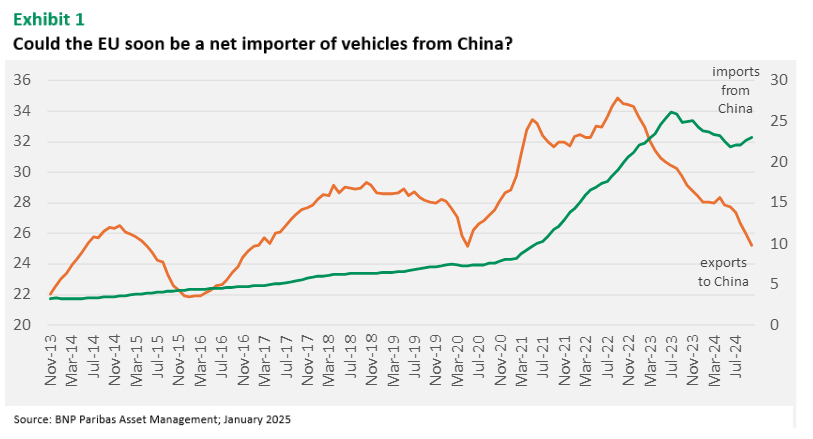
The lingering troubles in the property sector have sapped consumer confidence. To spur growth, Beijing has turned to exports. This new dynamic can be seen clearly in the evolution of car imports and exports.

European Union exports of cars to China have fallen by 28% over the last two years, to levels last seen during the Covid-19 lockdowns.

At the same time, Chinese exports, particularly of electric vehicles (EVs), have shot up, rising by more than 180% since 2021.

If current trends persist, the EU could soon be a net importer of vehicles from China.
Important information

Please note that articles may contain technical language. For this reason, they may not be suitable for readers without professional investment experience. Any views expressed here are those of the author as of the date of publication, are based on available information, and are subject to change without notice. Individual portfolio management teams may hold different views and may take different investment decisions for different clients. This document does not constitute investment advice. The value of investments and the income they generate may go down as well as up and it is possible that investors will not recover their initial outlay. Past performance is no guarantee for future returns. Investing in emerging markets, or specialised or restricted sectors is likely to be subject to a higher-than-average volatility due to a high degree of concentration, greater uncertainty because less information is available, there is less liquidity or due to greater sensitivity to changes in market conditions (social, political and economic conditions). Some emerging markets offer less security than the majority of international developed markets. For this reason, services for portfolio transactions, liquidation and conservation on behalf of funds invested in emerging markets may carry greater risk.

Back to Top