
Defence-related investing has taken over as the dominant investor theme for thematic exchange-traded funds. If investor flows were focused on technology-related and clean energy exposures in 2021 and 2022, this time is different: flows are now led increasingly and exclusively by defence-related exposures.
This comes as no surprise given the increase in geopolitical tension in the last few years and the response by governments – on both sides of the Atlantic. Flows have accelerated as Europe awakens to the fact that US assistance against potential threats is no longer guaranteed, and the continent will have to build out its own capabilities.
European governments are now committed to boosting defence spending by billions of euros after decades of underinvestment. These pledges have been backed by the European Commission’s ReArm Europe Plan/Readiness 2030 announced in March and other initiatives:

With over €1.6 trillion in planned investments over the next 10 years, it has become apparent to investors that a long-term opportunity is emerging. ETF flows have reflected this. The trend started in 2024 with just under €1.9 billion in flows into defence ETFs. The pace has accelerated in 2025 with already over €5 billion in inflows so far this year.

How to invest in this trend
One option is passively through an ETF. To invest in European defence companies that are focused on developing new technologies to keep pace with advancements and the changing threats, we have opted for a strategy using a customised benchmark constructed and administered by Bloomberg Intelligence.
The Bloomberg Europe Defense Select index has been put together to track the equity performance of European defence companies. To select eligible constituents, it uses sector classification: it includes all companies classified in the aerospace & defence sector based on the Bloomberg Industry Classification System (BICS).
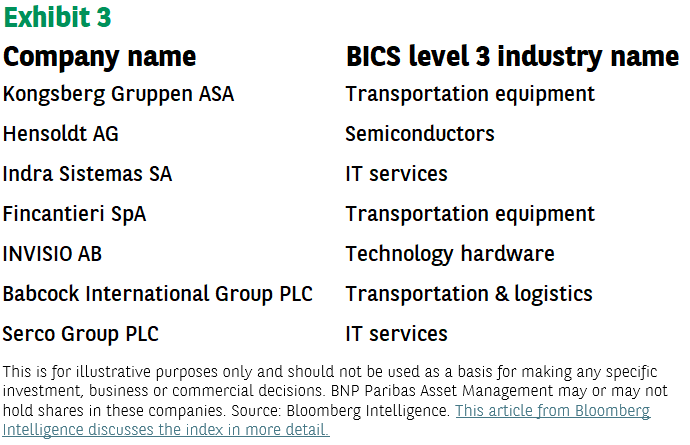
The index also captures companies outside the BICS sector, but with significant exposure to the defence value chain. As a result, it includes companies from five other BICS sub-industries.
Also read: European strategic autonomy – Imperative, challenges and financial commitments


