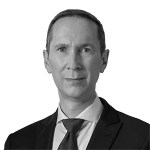
Andrew Craig, Co-Leiter des Investment Insight Centre, spricht mit Lorraine Sereyjol-Garros, Head of ETF Business Development, über die Aussichten weiter “berauschendes Wachstum” im Billionen-Dollar-Geschäft mit börsengehandelten Fonds. Zu den aktuellen Trends gehört das Aufkommen aktiver ETFs. Diese ebnen den Weg für ETFs, die gegen herkömmliche Benchmarks verwaltet werden, wobei die Auswahl der Vermögenswerte auf der Grundlage spezifischer Umwelt-, Sozial- und Governance-Kriterien erfolgt.
Sie können Talking Heads auch auf YouTube anhören und abonnieren und das Transkript lesen.
'%20stroke-linecap='round'%20stroke-linejoin='round'%20stroke-width='1.5'%3E%3Cg%20id='Groupe_2053'%20transform='translate(0.000000,%200.000000)'%3E%3Cg%20id='Groupe_2052'%20transform='translate(0.000000,%200.000000)'%20stroke='%23000000'%3E%3Cpath%20d='M18.4540324,59.8528676%20L53.9497699,59.8528676%20M18.4540324,46.9257252%20L53.9497699,46.9257252%20M18.4540324,33.7194065%20L53.9497699,33.7194065%20M49.3206324,1.68214405%20L49.3206324,15.8351117%20C49.3268545,18.7239746%2051.6700073,21.0660674%2054.5664199,21.0785262%20L70.1474885,21.0785262%20M71,88.1573858%20L71,97.21999%20C70.9921897,99.8577889%2068.8493379,101.993774%2066.2046228,102%20L4.79395637,102%20C2.1494732,101.99377%200.00703000231,99.8575597%206.82121026e-13,97.21999%20L6.82121026e-13,4.78284428%20C0.00702293205,2.14481193%202.14901353,0.007786332%204.79395637,3.41060513e-13%20L46.7673604,3.41060513e-13%20C49.8036296,0.164165919%2052.6966954,1.34042575%2054.9827296,3.34019673%20L67.5729037,15.6253751%20C69.6239707,17.8560674%2070.8352532,20.7275985%2071,23.7498333%20L71,57.5783595'%20id='Tracé_4850'%3E%3C/path%3E%3C/g%3E%3Cline%20x1='18.4540324'%20y1='72.9897466'%20x2='53.9497699'%20y2='72.9897466'%20id='Ligne_2193'%20stroke='%231D1E1C'%3E%3C/line%3E%3C/g%3E%3Cline%20x1='70.5'%20y1='65'%20x2='70.5'%20y2='83'%20id='Ligne_2194'%20stroke='%23018D54'%3E%3C/line%3E%3C/g%3E%3C/g%3E%3C/svg%3E)
Transkript lesen
This is an audio transcript of the Talking Heads podcast episode: Exchange-traded funds: adding ESG into the mix
Andrew Craig: Hello and welcome to the BNP Paribas Asset Management Talking Heads podcast. Every week, Talking Heads will bring you in-depth insights and analysis on the topics that really matter to investors. In this episode, we’ll be discussing exchange traded funds – ETFs – and in particular, recent developments and trends in this sector. I’m Andrew Craig, Co-head of the Investment Insights Centre, and I’m joined today by Lorraine Sereyjol-Garros, who’s Global Head of ETF Business Development for BNP Paribas Asset Management’s ETF and Index Solutions. Welcome, Lorraine, and thanks for joining me.
Lorraine Sereyjol-Garros: Hello, Andy. Thank you for having me.
AC: To set the scene, the global ETF industry has been growing at a heady pace in the last 20 years, with a compound annual growth rate of around 24% since 2000. To continue at this pace, the assets under management in ETFs would double every five years. Total ETF assets under management amount to around EUR 10.3 trillion, with around EUR 890 billion of new inflows in 2023, according to numbers from JPMorgan.
The ETF market in the US is more mature. ETFs account for around 30% of the assets in pooled vehicles, up from around 19% in 2019. Here in Europe, we’re catching up rapidly. ETFs have a market share of around 15%, equivalent to around EUR 2.1 trillion of assets in the UCITS format of pooled vehicles, up from 8% in 2019.
We had a market context which was particularly favourable for ETFs in Europe in the last few years, and they gained a share of net new capital of around 58% in 2023. It’s a booming market, developing rapidly. One of the key emerging trends is the appearance of active ETFs, which have captured 20% of net global ETF flows over the last 10 years.
AC: Lorraine, can you please talk us through this trend towards active ETFs? What’s driving it and where do we stand today in Europe?
LSG: Client interest in active ETFs is predominantly seen in US markets, where preferential tax treatment of exchange-traded funds has led to a transition from active mutual funds to active ETFs.
Our new range of fixed income ESG-Aligned ETFs encompasses active ETFs: they do not replicate an index, but – importantly – target a performance like that of the benchmark while integrating BNP Paribas Asset Management’s ESG criteria. Usually, active ETFs apply an active investment strategy and aim to outperform a benchmark. BNP Paribas ESG-Aligned ETFs, however, are unique in the market in that they apply an index-like approach using a proprietary ESG framework.
Like actively managed products, the ETFs use a reference index to establish a starting investible universe. This benchmark is used for performance and risk management purposes as the funds apply tracking error, sector and duration controls relative to the index.
According to a BlackRock study, 76% of US investors are very interested in active ETFs versus 48% in Europe and 50% in Asia. In Europe, it is still early days, but BNP Paribas Asset Management sees this as an important trend.
AC: A second distinct trend in the ETF market is the shift towards ETFs that take into account environmental, social and governance criteria in the selection of assets. Around 30% of net new cash in ETFs in 2023 went into these ESG ETFs. Can you tell us about the positioning of ESG ETFs at BNP Paribas Asset Management, where we have particular expertise with a strong presence in the sustainability market via our Sustainability Centre?
LSG: In fact, BNP Paribas Asset Management is the go-to asset manager for sustainable investment. Our Sustainability Centre is independent and uses external specialised providers with open architecture to perform in-depth qualitative research.
Our track record stands out on the ETF side. We launched our first ETFs 20 years ago. We were the first asset manager to launch a low carbon ETF in 2008 and we have ETFs relating to the circular economy, the blue economy, ESG infrastructure, sustainable listed real estate and biodiversity indices.
Since 2017, all our new ETFs have been sustainable ones. 80% of our assets under management are classified as [Sustainable Finance Disclosures Regulation] SFDR Article 8 or 9. We are number one in Europe and we have an active and consistent ESG voting and engagement policy across our ETFs.
AC: How is fixed income being developed within the ETF market?
LSG: There is strong demand for fixed income ETFs, driven by two main factors. One is a market context, with higher yields resulting from central bank rate increases. Investors are looking to lock in those higher yields for longer using a low-cost instrument such as an ETF.
Listeners should note that central bank actions have pushed up market volatility and ETFs are typically well diversified, which spreads out their sensitivity to volatility, making for a smoother performance.
The other factor that supports fixed income ETFs is demand for sustainable investments. Investors are switching from non-sustainable fixed income to sustainable, just as they did for equity.
Last year, 50% of all ETF flows went to bond ETFs. That is substantial given that bond ETFs account for only 25% of total assets under management. But there are not many products. The offering is limited, so a lot of clients are looking for fixed income ESG [ETFs} on sovereign and corporate bonds.
AC: How does our new range of active ETFs with a tailored approach to sustainability respond to clients’ needs?
LSG: A lot of our clients are looking for sustainable ETFs with a low tracking error versus non-ESG indices, so our new range fits the purpose. They will have access to the proprietary BNP Paribas ESG methodology.
This responds to demand from numerous clients such as private banks and institutionals. It’s also an opportunity for investors to get exposure to ESG fixed income markets. This new range comes in a format favoured by clients, giving accessibility to the local market, liquidity including intraday trading, transparency with publication of the portfolio every day, diversification and lower costs.
AC: Lorraine, thank you for joining me.
LSG: Thank you, Andy.